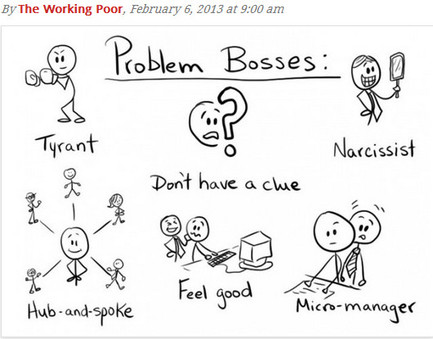
 This comes as no surprise. I do a values assessment with clients to determine what has worked in previous jobs and what they want in future positions.
I have seen the majority of people leave for the lack of value satisfaction primarily caused by a bad boss, carnivorous teammates, or a toxic corporate culture. It was rarely if ever the money. Money factors in leaving if they have not gotten raises in several years or been passed over for promotions. Typically people focus on negotiating the money on the way in, so they know what they are getting. They often ignore the red flags on the people and culture. _________________________________________________________________________________ Hard to believe? According to Michelle McQuaid, a world leader in positive psychology interventions in the workplace, if you feel unappreciated, uninspired, lonely, and miserable, you’re not alone. In a survey of 1000 American Executives McQuaid found a “whopping” 35 percent of Americans are happy at their job. And, 65 percent say a better boss would make them happy. Only 35 percent say a pay raise will do the same thing.........A 2009 study published by the Harvard Business Review suggested, “…the majority of people say they trust a stranger more than they trust their boss.” read more here
0 Comments
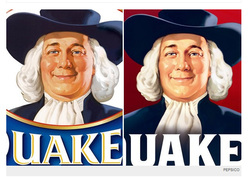 Younger, thinner, more interesting looking is the new oatmeal look. After 136 years, the Quaker Oats guy logo has been updated to appeal to a new generation of young adults as well as appeal to age-phobic baby boomers. If you compare the two logos, yes the one on the right is the new one, the new one shows an updated font style too that is a brighter white and not "old timey" looking.
According to the Time Magazine article, Quaker Oats owner PepsiCo introduced the changes in an effort to make the brand “fresh and innovative,” which might take a bit of doing, given that their product is a dessicated cereal grain. You may not be going on 136 years old, but when it comes to staying viable in the global talent marketplace, well then consider an update of your personal brand. How do you do that? Well it is less the wording in your content which focuses more on branding/rebranding. Rebranding positions you to move into new fields, business sectors, and industries. A brand refresh is gives your current brand a younger, more vibrant, newer, fresher appearance. That is more about image and look. At the warp speed of business and the Internet, a professional look evolves much more rapidly. Digital Documents in 2012 look different from those in 1998 Well, theoretically they should look different but some professionals are still using resume formats and layouts since before the faxed resume. Resumes, websites, blogs, or social profiles are built now to look great on a screen as that's where they are read. In fact, if you go to the Way Back Machine (Internet Archive) and check out early Linkedin, Amazon, blogs sites, you will see how different and dated they look now. The fonts now must take into consideration how well a font renders online and on a screen. Just look at the different in readability between the two Quaker Oats logos. Modern sans-serif fonts look younger and fresher. Serif fonts like Palatino render better onscreen than the traditional Times Roman, making for a crisper, fresher look. The layout and design of all documents are moving to a lighter, more open look. Just look at the new Google Blogger with dynamic, open blog that is image focused versus the blog you are reading now. The older you are, the younger your photo style Most executives use their photos provided by their company's PR department on Linkedin and for other business requirements. If you are over 50 and not working in government and financial services, this is not a good idea. More stable, traditional business sectors like seeing their executives in suits and business attire as does consulting services. There is a reason for the slang referring to "the suits". Using photos taken outdoors, in natural light, preferably in business casual will create an image of health, vitality and youth as well. Business formal creates age aura. If you have substantial career credentials and achievements, then you don't need to look the part as well. Take the photo one step further and be in dressy sports on a wind swept beach with a Golden Retriever. Lacking ocean, use a park and a poodle, or ski slopes, etc. Just don't look too much like you're into extreme sports. Remember how the category "interests" was put at the bottom of your resume and you got to list things like: biking, skiing, marathon running, etc etc? Well, one well done photos creates the better impression of you without the ubiquitous laundry list. Update your look, wardrobe, and appearance There is age discrimination and it is subtle, unconscious, and hard to prove when practiced in hiring and firing. In a media marketing driven, consumption based culture, we are manipulated by the image and look of products which are presented with an emphasis on sex, power, fun,and excitement. Yes, we like functional too, but we get sucked in by looks first. Think how many people wear those ergonomically uncomfortable, auditorially poor, and, basically, cheesy Apple iPod earbuds because they look cool and recognizable in white. A style makeover may not be annually necessary but every five years it is mandatory. This includes product: skin care, hair care, and body maintenance. There is a reason sites like Dermatologistrx is thriving online, and why both men and women no longer consider facial peels and lifts optional. It is not about looking younger which may be hard to archieve, especially after a certain age, but looking fresher, more vibrant and vital. The Quaker Oats guy looks thinner, healthier, and a bit younger and you should too!  Is it fear and loathing? Being a creature of habit and learned behaviors? A lack of imagination? Or do we just tend to just take the path of least resistance?
All of the above, depending on the individual. What qualifies as low hanging fruit when it comes to job opportunities?
We are creatures of habit and learned behaviors so if you got recruited out of college and search people "placed" you in all your jobs, then we assume the past predicts the future. It doesn't in career advancement. As we climb to the top, there are fewer jobs and the competition is fierce. We don't just get "placed" as easily. And as we age, there is younger, less expensive talent competing for the same opportunities. Your business sector may become commoditized and there is no room to grown professionally. We don't realize that the best fruit can be harder to find, be at the top of the tree or hidden under leaves and branches. Often our mentors, bosses and colleagues can be our undoing. They may as they move on bring you with them but that may not be the best option for you. I have seen professionals in a beleaguered companies and business units actively solicit their colleagues to join them. Did misery need company? Did they want to be rescued from their drowning struggles? Were you misled or did you just not even expend the effort to find out about the mess you were getting into? When we buy fruit at a stand or market it is often green and unripe, or bruised in the picking. Today, the savvy professional, especially if not having conducted a search in the past 5 years, must:
 These trends may seem not new to many in the career coaching field or in Silicon Valley but this article does an excellent job of covering and updating the take on these dynamics in global work:
5 Trends Driving the Future of Work by Chris Jablonski Summary: From legions of independent consultants to cities dotted with coworking facilities, the future of work is virtual, online and global. Trend 1: Independent consulting to see hockey-stick growth curve Trend 2: Order books, movies and now … workers online Trend 3: Coworking moves beyond early adopter stage Trend 4: Adaptive lifelong learning the norm Trend 5: Jobs of the future will either retrofit and blend existing jobs, or solve entirely new problems. Read more at ZDnet.com, Yes, we know that the jobs of the future will be different, even with the same title, from what they do now. Who would have thought that a car mechanic would need some computer skills to diagnose and repair the inner mechanics of an automobile 50 years ago? But they do now. Certainly, marketing exists more and more online than off. Challenge: predict where your job/field/function is going and how going are going to mutate into those changes yourself. One solution includes applying #4 and being continuously learning new skills before you need them. Coworking suits the Contract Nation USA just fine as more and more of the labor force is on a just-in-time basis. Banding together for company, economy of scale, and collaboration yet remaining independent entities is one very useful technique to survive working as Me Inc. Challenge: finding the right co-habitation work space with people who create synergies of opportunities and networks with yours. This is more critical than finding your soul mate. But the article does well in painting in tangible living color brushstrokes just how fast we are moving to that Me Inc. world with the visceral image of the hockey stick. Fan that I am, it also brings to mind the brutality of that game as an apt analogy to the sometimes cutthroat competition for projects and gigs. Challenge: to differentiate yourself and keep from becoming a commodity price-driven member of a herd of contractors chasing business. This is another place where #4 learning new skills and acquiring new knowledge would help. We know everything will be online as it seems like most of it is now. Of course recruiters live on Linkedin and deploy Google searches to find talent. Resumes are rapidly becoming obsolete in favor of more copious dossier on you in the interweb. Workers online using the various sites such as guru.com, elance, etc is now the norm. Challenge: to by-pass the 3rd party brokers that add on 20-30% to your hourly rate and market yourself directly to potential employers making copious use of online branding and marketing. Using a website, blog, social profiles (lots of them), etc, build visibility to promote Me Inc. Good trend spotting means good responses on all our parts. If we see it coming we can do something about it. Moreover, these trends are global. We compete, work with, network and collaborate across borders, timezones and countries. Opportunities can be anywhere and so can you. Email me if you want to find out how I can help you be a guru consultant and look like a thought leader online. I have done it for others and can show you how too. patti@careercompany.com 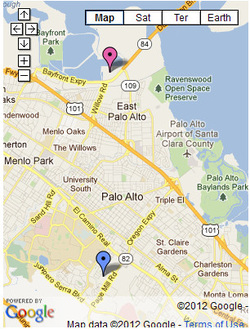 FB move from Palo Alto to Menlo Park Here is an excerpt from an article about Facebook moving to Menlo Park and the hardship to the city:
"On the other hand, Sun used to generate annual sales taxes of $431,000 to $827,000 for the city. That's because the state levies taxes on physical goods like computers that it doesn't levy on virtual services like online ad sales. Having more employees on the campus means the city is going to have to expand services to accommodate them, such as hiring more police officers or clerks. And while new high-income Facebook employees moving into the area might send property assessments soaring, Proposition 13 will limit the amount of additional property taxes." Read Chris O'Brian's story in the San Jose Mercury News You want Facebook to move to your city right? Think of all the job creation and tax revenues! The City of Menlo Park has mixed emotions about Facebook bringing its entire workforce into one mega campus formerly occupied by Sun Microsystems. Yes, there will be some upfront fees and revenues collected with the move-in but the long term liability is increased demand on city services with little increase in ongoing sustainable tax revenues. What is Menlo Park doing? Why asking Facebook for a handout to subsidize low-income housing in one of the most expensive cities in the Bay Area. Facebook is more than obliging. It is truly being a good citizen and why not? It certainly is getting off virtually scott-free compared to actually paying taxes. The issue is one of unequal and unfair burdens of taxation on different types of industries and sectors in the California economy. This is an antiquated tax code that does not respond to the realities of a new economy and the Bay Area's economic base moving from computer and semi-conductor products to the Internet. The State of California is fighting to get Amazon to charge sales tax to residents of the state. But compare that tax income, to the revenues that could be generated by the virtual services of local Internet companies. Facebook is a $500,000,000 company (I put all the zeros in to make a visual point). Why are they, and Linkedin, Groupon, Yelp, Zynga, and others not paying tax on their virtual revenues as Sun did on their computers and Apple does now on its iPhone, iPad and iPod? The law needs to change and now. How ridiculous that a city is reduced to begging for a handout from a company. Let Facebook hire its own fire department, police force, street maintenance workers.  There are known knowns. These are things we know that we know. There are known unknowns. That is to say, there are things that we know we don't know. But there are also unknown unknowns. There are things we don't know we don't know.
Donald Rumsfeld I laughed when the then Secretary of Defense made that statement as it sounded like a military-speak aphorism. But, it rings with profound wisdom the more I deal with career management and employment issues in this economy. How do we deal with the business and career issues we don't know we don't know? I advise my clients to do deep research on companies for interview preparation, but that never, within time parameters, uncovers sufficient information to make a well reasoned decision on an offer if one comes. Sometimes it is the luck of the draw that you land well. What do you do with networking referrals devoid of context or personal engagement? You are left in a vacuum to deal with the referral and in the dark as to how to proceed. Time is so precious. You know it if you are in a driven high-pressure position, in career transition, or an entrepreneur. There isn't enough of it, and your living comes from the finite amount of time that you can dedicate to your business. We don't have time to be sidetracked with the unknowns that we don't know. What's worse is that we don't know what we don't know until it is past tense. Often in retrospective, we can look back at an entire situation and see what we needed to know at the time. I believe that is the Monday morning quarterback syndrome personified. Unfortunately, I don't know what to advise you as I don't know what you don't know. But I do have a few mental guidelines that help me and I am happy to share them. Everyday is Groundhog Day Remember the Bill Murray movie where he relived the same day over and over again until he actually had no unknowns left to figure out. Seriously! He ended up knowing everybody in the town and everything they were going to do that day. His level of response by his final rerun day was masterful. I try to remind myself that every day is essentially the same. Within each day there will always be unknowns that are unknown. The result of that attitude is not ending up feeling blindsided as I have already factored that in. When I stay very attuned and mindful I can almost sense them coming out of left field. It is comforting at least. Belts and Braces The British, bless them, had an unspoken rule about being prepared for the unknowns in life. Back in Victorian times and the early part of the last century, men work both a belt and braces (suspenders). Over time and the era of spandex and jeans below your butt, the braces have fallen by the wayside. But belts and braces represented a way of approaching life. The message is clear, expect catastrophe and be doubly prepared: keep an umbrella in the car, hide a house key under a rock, back up your files...twice. You may never need to implement plan B but it's good to know that you can. Think about it. That's why we have a Vice President of the United States. The Morning After the Night Before Letting decisions stew a bit is a good thing. Figuratively, "sleeping" on business problems and issues allows time to have more information unfold and it diminishes the number and size of unknowns. There are certain Myers Briggs personalty types that are really in their comfort zone when they get things decided, goals set, and marching orders relayed to the troops in an expedited fashion. They rush to judgement and freak out when the other shoe drops with unforeseen catastrophes. Other personality styles prefer to put off decisions and just let things unfold. Often that is the best remedy for those blindsiding unknowns. Just let them sort of slide into view rather than dropping on you. Embrace the Unknown The greatest adventures, opportunities and joys in life are most sweet when they have not been predicted, expected, and factored in. Aren't the unknown unknowns often some of the nicest, best surprises that come upon us. We just think that any unknown will be necessarily be bad, negative and undesired. If life is like a box of chocolates then it helps to be an epicurian with a broad palette. Thus you are delighted with whatever you find in the box. The unknown unknowns will always show up in our lives. The impact they have depends on how we choose to experience them.  What is worse than job interviewing in person? Interviewing with a bad webcam using a poor SKYPE connection. You end up with the goldfish bowl look because of the camera distortion. Or your eyes are always looking down at the screen at the interviewers to whom you give no eye contact.
The fine art of interviewing is not improving anytime soon. It can still be a painful, dreaded, nerve-wracking experience on both sides of the desk. Everyone has a nightmare story about the "interviewer from hell", someone who was so bad at asking questions that you absolutely knew you were never going to be hired. What about the interviewer who doesn't ask questions but rather just chats as the new best friend that you never hear from again? Or, the interviewer who asks questions so unrelated to the job you wonder if you applied for the wrong position? Then there is the distainful interviewer, who acts as though it is a supreme imposition just having you in the room. I could go on and you can in the comments section to this blog. How Do You Ace It? Yes, bad interview stories are abundant. However, it still is on you to acquit yourself well during the interview. What does that mean? - Should you ace all the questions with absolutely appropriate answers? - Should you offer great, relevant examples, facts and figures with glib ease? - Should you mirror the interviewers body language to make him/her comfortable in your presence? - Should you create a dialogue to interact in easy conversation, thus putting your interviewer at ease? - Should you provide business solutions to demonstrate the compelling value in hiring you? Yes, of course, to all of the above! But, while that will certainly go a long way to getting you hired, that's not it. If you do everything above, unless you are a glow-in-the-dark java software developer, it is not enough to be hired. And, if you do just some of the above with a less than stunning acquittal of your expertise and you successfully do one more thing, odds are that you will be hired. 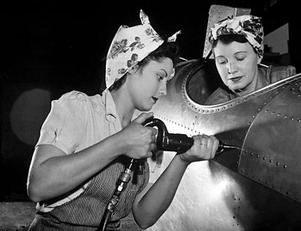 The World Economic Forum ended on a dark worried note about the future of the worldwide workforce. The Davos gathering didn't doubt the numbers or projections. It is the means to the end that gave them consternation.
According to Vikram Pandit, CEO of the global bank, Citigroup Inc., "The world needs 400 million new jobs between now and the end of the decade, not counting the 200 million needed just to get back to full employment, so "that should be our number one priority". It is not a simple scenario to just materialize 600 million jobs in 8 years. It is a real and dire problem with the nothing less than the world economy at stake. The financial leaders and heads of corporations spent time finger pointing across national boundaries, but they came away without a tangible solution how to grow worldwide GDP and therefore jobs. That there is no concerted and coordinated global response to a looming work crisis may indicate a fundamental problem with how our worldwide economic system functions with implications that impact all class and economic levels. We Aren't Entitled to Work? Is there such a thing as a right to work in a free market, capitalistic, global economic system? Are we as a population in the USA entitled to earn a living if we are sound of mind, able bodied and skilled? It was easy to ignore this issue when unemployment numbers were composed of the poor, uneducated and unskilled. However since 1980, every recession has generated unemployment creep upwards from manufacturing, to white collar, to now the executive suite. This has resulted in a substantial ongoing dislocation of the socioeconomic structure of the US population . Today the 12+ million "officially" out of work is about the size of Illinois and that fails to account for the underemployed and those not looking. At the same time, the employment agency, Manpower, reports that 75% of its revenues are now from outside the USA. In America, we know where the jobs have gone and continue to go-- elsewhere. But that begs the question as there still won't be enough work to go around worldwide with an emerging, educated, skilled, global middle class. Are we entitled to earn a working living at the expense of another somewhere in the world? Doesn't everyone deserve the opportunity to make a contribution and be paid for doing it? The essence of work is contribution. You do a day's labor and are paid a living wage. But what if there is not enough work to go around anymore? Does that mean that those that want to work and can't find it are facing life as an underclass of people who are going without the basic necessities of survival, and are deprived of being contributing members of society? Will work, especially highly skilled, intellectual work, become an entitlement or privilege? Wherever you are in the world, you got your job because of a set of advantages. Call it luck, fate, geography, position, status, connections, or price-point. The others who missed out on the opportunity didn't quite have your unique set of advantages but they were just as smart, talented, hard-working, earnest and yet unemployed. The Mountain Dew soft drink brand dissolved a legal challenge from a customer who claimed a mouse was found in his can of the "Dew". The company argued that would not be possible as their product would have dissolved the mouse in less than a week. Coca Cola has the same reputation with pennies.
This does not explain why I continue to drink this stuff but it does make an analogy to the act of appreciating. When we appreciate and acknowledge others it has the same corrosive effect on rancor, resentment and grudges as the dissolving of a mouse in a cola can. Appreciation dissolves low morale, under performance and obstructions inside a company. This article in the Harvard Business Blog describes this in more detail. One quote sums it up how appreciation is an antidote to a toxic organization: "The impact of negative emotions — and more specifically the feeling of being devalued — is incredibly toxic. As Daniel Goleman has written, "Threats to our standing in the eyes of others are almost as powerful as those to our very survival." Read the entire article here. Below is an extract from the Forbes article, " This One Leadership Quality Will Make or Break You". From the perspective of managing your career, this message resonates as well. Too often, we expect that all good things will come to us out of a expectation of deservedness.
These traditional axioms have embedded in them an expectation of deserving or being entitled: if we study hard, get good grades, work hard, meet our goals and objectives, dot the "i's" and cross the "t's" then great opportunities and career success will come to us. It is difficult to believe that there is an expectation of entitlement in those beliefs until for some reason they are not fulfilled. The shock of realization arrives when we find that exemplary performance is simply insufficient. Nowadays that can often be the case. In Lewis Carroll's children's story, "Through the Looking-Glass", when Alice was running with the White Knight through the woods, she asked him why they were running. His puzzling reply was that running was done to stay in the same place and to get anywhere they needed to run twice as fast. The essence of pursuit is to not expect that benefits will come to us if we do the right things. They don't anymore. There is too much competition for job openings, promotions, and opportunities. We need to be in active aggressive and continuous pursuit of our dreams and desires. We need to do it purposefully, with focused intent, and clear deliverables in mind. It is an interesting article: One of the most often overlooked aspects of leadership is the need for pursuit. Great leaders are never satisfied with traditional practice, static thinking, conventional wisdom, or common performance. In fact, the best leaders are simply uncomfortable with anything that embraces the status quo. Leadership is pursuit – pursuit of excellence, of elegance, of truth, of what’s next, of what if, of change, of value, of results, of relationships, of service, of knowledge, and of something bigger than themselves. Smart leaders understand it’s not just enough to pursue, but pursuit must be intentional, focused, consistent, aggressive, and unyielding. You must pursue the right things, for the right reasons, and at the right times. Perhaps most of all, the best forms of pursuit enlist others in the chase. Pursuit in its purest form is highly collaborative, very inclusive and easily transferable. Pursuit operates at greatest strength when it leverages velocity and scale. Read more at Forbes.com  An engineer from Slovakia has loyalty to the American company he works for in Australia because he is waiting for his Australian green card. This is the global twist on the job=citizenship situation that has run rampant in the USA for years with immigrant professionals. Now it seems with many professional seeking opportunities out of their home countries that this type of hostage employee is global. The term wage slave has has taken on a new meaning with a scarcity of good employment opportunities in some countries while more plentiful in others, greater numbers of job seekers are being held for visa ransom by some company in Brazil, Singapore, Canada. The worse offender used to be the USA but more professionals are seeking opportunities elsewhere now given the decline of the US economy. Interesting I met an Indian executive who wanted advice on a job search in India from the USA. He had spent the last 12 years in the US working for the top Fortune 500 companies. He was finally just getting his green card and decided to just leave it all behind and go home for better opportunities. He was fortunate as he loved the company he worked for. The funny thing about employee loyalty is that it is engendered by either a scarcity of jobs or a devotion to the employer and the product. However, if a professional needs a company to employ and sponsor them to obtain a visa to stay in a country then enforced loyalty is tantamount to being held hostage to the job.
Most professionals I have met in this situation felt powerless to control their destiny but I have a few simple suggestions to at least mitigate the impact of visa situation on your employment.
Passion is a funny, quirky emotion that comes and goes. But sometimes, in love and life, when you do passion right it has staying power. Scott wanted more than anything to ski everyday all winter long. He left before the last crash burst to follow his passion. An banking executive by trade, he made the big jump to a large, high-profile Canadian ski resort as a financial consultant in order to satisfy his passion for the slopes. He reasoned that going to a dead-end, boring job that would earn a small living as a worthwhile trade-off for a great skiing opportunity.
He is now the IT manager, supervising 2 reports, and managing a whole system upgrade with new software installations to manage ski-lift ticketing and lift operations. It turned out to be the best of all worlds as he loves his job, and is well-paid and pursues his passion. Why is it that some people land a job within record time while others seem to linger in a search limbo, languishing without really looking? Yes, there are obvious external factors that impact the length of an job search: age discrimination, requirements of an industry, heavily impacted functions and a few regions in deep recession. However, external factors do not account for everyone in search limbo. Seems that your degree of passion and engagement helps to determine the ease and ability to be out there and involved in that business and to be known and connected. They are just driven to do it and will continue to turn over rocks, go down paths and do whatever it takes to be in the game no matter how rusty or inept at networking they are. Passion can be the crucial ingredient to future success when one is in a transition phase between employment, consulting engagements or startup opportunities. Passion generates the motivation and drive to act and to do with the requisite intensity and persistence in the face of adversity, obstacles and daily doses of bad news reports. Certainly money is a key motivator, but people leave substantial incomes every day because they were simply miserable going into work every day. Organizations change over time, new management teams are formed that may not be compatible. Haven’t you seen people more consumed by their philanthropic work than their current position? That they pursue the former with more zeal than the latter can be a guidepost to other possible futures. They frequently come to realize that it is possible to make the avocation into the main career passion. Certainly, it is often too easy to be discouraged and dissuaded from making that kind of transition because passions seem to present themselves as financial and career risks. Sometimes it is not an obvious route to monetize a passion but we tend to foreclose options by pre-deciding against them. A woman had a passion for gourmet food, cooking, and great restaurants. Fortunately she lived in San Francisco so they all were in abundance. After years of working in public relations in consumer brands, she segued into the hospitality industry. She started with small steps: writing articles, attending food events to network and doing some public relations pro bono work for a small ethnic restaurant in to promote their unique cuisine. She is now with an executive in a San Francisco public relations firm in their food vertical. Yes, there are trade-offs to consider, priorities to rearrange and terms to come to but sorting out your values and options to put meaning, and passion back into their work lives will be worth the effort. Whenever M&As happen everyone always speculates on the manpower outcomes. Who will stay and who will go. Often a smaller acquired company is left to be a wholly owned subsidiary with its management intact until something goes wrong or changes dramatically. That's what happened to a company where my client is interviewing for the CEO role. It was geographically distant from the parent company. Further, it was bought for both the technology and the talent who could deliver it.
It's a small unique engineering company located in central California. The founder sold it to a well-known company in Kansas and stayed for 4 years to ensure a successful transition. Now the search is on for a new CEO. Here are the search challenges:
There are moments when retained search firms earn every dollar they charge. This was one of them. Several candidates were put forward and rejected prior to my client. My client and I prepped for the in-person interview with the search firm. Here are the interview issues we addressed:
The interview is not about the product and service of the company. It is not about how skilled and experienced the potential candidate may be. It is about corporate culture, values, and emotional intelligence. All soft stuff, very hard to probe within the context of an interview. Better to spend time the company and candidate together to get to know each other over lunch, dinner, group meetings and on-site trips. It is a career derailer to take a position that is not the best fit for you at this level. Nor should a company hire at this juncture a CEO that doesn't have a 90% chance of success. It is a crucial transition in the acquisition process when the old management steps aside. The entire success of the company can hang in the balance: wittness the fiasco of the MacDonalds - Boston Market acquistion. Finding and hiring the best talent is always a challenge but a Merger & Acquisition situation makes it especially a deal-breaker. Too often I have seen executives come out of specific corporations noted for their strong cultures and not do well in adjusting to a radical career move into a much different culture. I read in Deal and Kennedy's book, Corporate Cultures, that the founders of an organization set the tone and the style of the culture.
I suppose this is obvious when you look at companies with notable CEO's such as Apple's Steve Jobs, Berkshire or Hathaway's Warren Buffet. It is less obvious to connect the style of IBM to Thomas Watson the primary CEO who grew the company from selling typewriters to a computer manufacturer. Can we see the imprint of Henry Ford anymore on Ford Motor Company, or of Christian Dior on the House of Dior? It seems the farther was the organization is from its early roots and founder in terms of time and even geography the more imperceptible the origin of the culture becomes. I mean where is Erle P. Halliburton's ghost now that the company moved to a new HQ in Dubai? Nevertheless, the imprint of custom, tradition, and personality remains in how the employees conduct business, interact with each other and the world. A former hedge fund and derivatives operative from a prominent, infamous investment banking firm inquired about my services. The dynamics of the process with him was interesting. Once he determined that he wanted to engage my services he started to negotiate the deal. To him it was just a normal business transaction and his way of doing it. He started on price, even though I offer multiple packages at different flat rates that are substantially lower than my hourly rate, he tried to haggle over my fees. When that didn't work he turned to terms and conditions by trying to combine multiple packages and extend the time spent by breaking down sessions into 30 minutes each...all, of course at the lowest rate. I decided not to work with him as our styles just did not match as he comes from a culture that is deal driven and so he is and I am so not. The moral of the story is that we all come from multiple unique cultures, not just your family of origin, but your professional field, and the organizations where you have been employed. Developing your awareness to your personality and behaviors traits enable you to make better "fit" decisions when evaluating your career options. "A human being is a part of a whole, called by us _universe_, a part limited in time and space. He experiences himself, his thoughts and feelings as something separated from the rest... a kind of optical delusion of his consciousness. This delusion is a kind of prison for us, restricting us to our personal desires and to affection for a few persons nearest to us. Our task must be to free ourselves from this prison by widening our circle of compassion to embrace all living creatures and the whole of nature in its beauty." Alert Einstein
I was having my monthly coaching session with my client, a successful marketing vice president in an online media company. We were discussing her current efforts in balancing home, family with new job, book proposal and a daily 2 hour commute.
She is one of the most dedicated and driven professionals that I have met. I have been with her career growth for over ten years now from dot.com companies through multiple graduate degrees, along with coast to coast relocations, marriage, and a baby. When her mom died in last year she had to fly to Europe to attend the funeral. Her then employer penalized her for taking time away from her position and she was summarily laid off after returning from the funeral. She landed an even better position in less than 2 months, a record in this economy, but again faces the challenge of keeping her life in equilibrium. She used to be the one to rescue a floundering company and do anything meet the goals and deliverables. But the lessons of the corporate political arena have instilled in her a wariness that has enabled her to back off her typical knee-jerk readiness to save the day. The latest test of her balance came with her agreement to write an interactive book. Talk about scope creep, the publisher went from a small book on a narrow but very interesting topic to an expansive book and a much more general topic . She would not have benefited from this expanded version as it would curtail follow on books and derail a potential series. And she would have to rewrite the proposal that she had already done. Her time was stretched too thin as it was. In revisiting her own career goals, priorities for balance and the value of a multi-book series for her professional stature and thought leadership, she decided to renegotiate with the publisher back down to the original agreement. Bottomline was as she put it to me, " No job loves you like your family loves you." I might add publisher as well. She has her priorities straight. A client was discussing the management change that led to his ouster from the executive team and the company when the new CEO brought in his own people.
It's an old story in terms of corporate politics that has never changed over the years. In this case the new CEO kept only those executives that were customer facing and board facing which was a very smart decision on his part. Unfortunately, the vice-president, my client, was in neither position. The CEO took out three vice-presidents in one day. Did my client see it coming? No. That is the curse of a blessed career with no roadblocks or derailments, when it finally hits it is hard. I have always thought that a little misery and suffering at the front of your working life is far better than reversals of fortune on the back end. As we climb to the top, our career success becomes less and less dependent on the companies we choose to work for than it does on the management teams who surround us. In the blush of youth, we often put aside cultural fit, corporate value match, in favor of opportunity, advancement and doors opened. But, in the full bloom of our career-life it pays to be cautiously aware of the fit as it can determine the upward trajectory of our careers. And in the end, our relationships with colleagues up, across, and down can be the bottom-line determinant of our survival. We leave them not the company. |