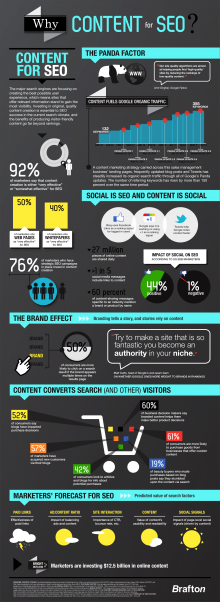
 New branding on a theory with a proven track record. Daniel Goleman wrote about EQ (Emotional IQ) several years ago making the point that people need not just smarts to get ahead as in IQ but the ability to relate to others as well. In fact the EQ was more important than the IQ all things being equal.
It is now as a theory moving into action and coming to real fruition with social networking and social media inside and outside organizations. Also globalization impels communications by video. The article is filled with good advice, and overview of the current situation. This continues to build a case for a good digital footprint that includes video, audio, image and content. Your first impression precedes you online and then in reality you will need to live up to it. ~~~~~~~~~~~~~~~~~~~~~~~ Why Likability Matters More at Work Likability Is More Important—and Harder to Pull Off March 25, 2014 7:03 p.m. ET, Wall Street Journal Is "Likability" is becoming a bigger factor for success at work as social networks and videoconferencing grow. The impact goes beyond a high-school popularity contest. The ability to come across as likable is shaping how people are sized up and treated by bosses and co-workers. Likable people are more apt to be hired, get help at work, get useful information from others and have mistakes forgiven. A study of 133 managers last year by researchers at the University of Massachusetts found that if an auditor is likable and gives a well-organized argument, managers tend to comply with his suggestions, even if they disagree and the auditor lacks supporting evidence. Likability is more important—and harder to pull off—on video than in person. Sometimes this can result in a style-over-substance effect. People watching a speaker on a videoconference are more influenced by how much they like the speaker than by the quality of the speaker's arguments, according to a 2008 study in Management Science. The opposite is true when a speaker appears in person. The use of personal videoconferencing is expected to grow 47% annually through 2017, according to Wainhouse Research, a Boston market-research firm. Read full article here
13 Comments
 Adam's Linkedin Photo Adam's Linkedin Photo I met Adam over lunch years ago at the height of the dotcom boom. My first impression was that I was talking not just to a really smart (Cal Tech educated) guy but incredibly insightful too. He has a unique ability to extract the essence of a topic, distill it down to the essentials and easily create a system or set of rules to apply it or use it.
The same is true for his take on networking. I have advised clients for years to grow the biggest networks they can and forget about the "trust" slogan Linkedin uses. If you don't then when you need to extend your reach to access help then you end up paying Linkedin to reach out to strangers. The other two points he made about how to use a network: often and with those worth working with are the keys to making all your contacts and time spent count. Too often people don't network until they need something. They never think that possibly giving in advance might be a good thing to do for the purpose of reciprocation. But, giving to the right connections matters. As Adam says, we must keep our network cleaned up and weeded out of less supportive connections. ~~~~~~~~~~~~~~~~~~~~~~~~~~~~~~~~~~~~~~~~~~~~~~~~~~~~~~~~~~~ The Basics of Power Networking By Adam Rifkin www.linkedin.com/in/adamrifkin/ Two years ago Fortune magazine identified me as the best networker on LinkedIn; this in turn led to some wonderful stories in Adam Grant's excellent book, GIVE AND TAKE. Since then, every day people ask me about things I’ve learned about networking on Twitter, PandaWhale, and in real life. I feel fortunate to have learned networking from many excellent teachers, and the greatest of these teachers was actually the Internet itself. The top three lessons of Internet computer networking serve as valuable lessons for human networking, too:
1. Networks add value by getting biggerIt seems uncontroversial now, but that’s because our thinking has been so inflected by many years of access to a public, open, scalable Internet. Back in the day, many computer scientists argued that networks would maximize their value by being made out of nodes that were more tightly controlled by a single owner. Similarly, until recently, human networks were small, tightly connected, and controlled by gatekeepers such as elite colleges, social clubs, and prestigious professional organizations. The Web has been a great example of how technology — in the form of apps such as LinkedIn — can help foster more connections than can be maintained in real life. TIP: Since networks add value by getting bigger, use every day as an opportunity to grow the quality of your connections. I am often asked how I created my network, especially given that I am naturally introverted. It turns out that building a network is not hard; with time and patience, you can do it, too. The key is to tend to your network a little bit at a time, over the course of many years. A good rule of thumb is to connect with at least 1 and up to 3 people every day. More than 3 means you're not connecting deeply enough. Each interaction need not take long; you can get started with just a single five minute favor each day. It's not about time; it's about authenticity. The main way to deepen a connection is through genuine interactions that share knowledge and stories and emotions. 2. Networks add value by being used more There are many obvious downsides of heavy network usage: slowness, conflicts, lack of prioritization, lossiness, and low signal to noise ratio immediately come to mind. But the corresponding upsides include plenitude, ubiquity, rapid growth, and habituation. They don’t call them network effects for nothing! The same lessons apply to human networks: the more we reach out to our acquaintances, the more value we create not just for ourselves but for all of them, too. TIP: It is important to connect EVERY day. Let's repeat that: EVERY SINGLE DAY. Some connections can be new (and, ideally, with a warm introduction from a mutual connection). Some connections should be re-connections with "dormant ties" that deepen a connection already made. Relationships are progressions and re-connections are the fuel for that progress. Deepening 1-3 connections every single day makes you healthier, happier, and it's good for your career. 3. Networks add value by being fault tolerantIn many ways the Internet is the very worst designed network of all time (think about how often things fail when you're surfing The Web!) but paradoxically that is also its greatest strength. Every part of it was designed to fail early, often, and hard without impacting any other part too negatively. On the human level, I have learned that communities must also be designed to deal with messiness, loss, and failure. Unlike the architecture of the Internet, we also have the ability to learn and grow from the error conditions of life -- which ultimately makes the whole network stronger if we all share what we’ve learned.TIP: Tend to your network like a garden, a little every day, by weakening connections. Weed your garden: If someone demonstrates s/he is not worth growing a connection with, do not invest more time with that person. Instead, invest that time in someone who IS worth knowing better. Over time, your network will dynamically reflect your efforts, and be wonderful and helpful not just to you, but to your connections, too. We distill these lessons into 3 rules of thumb:
 If you can’t get into a top-five MBA program, don’t even bother
By Jay Bhatti — January 15, 2013 Jay Bhatti is an investor and advisor to startups in New York City. Previously, he was the co-founder of the people search engine Spock.com. He also worked as a product manager for Microsoft. In 2002, he received his MBA from the Wharton School. Read more. The extent of his understanding about MBA is limited by his elitist world view. His main complaints are:
So, why get an MBA? For the network. Yes, the network. Example, UCLA is not in Jay's top five but it has over 30,000 alumni out there to help you with introductions, resources, access to opportunities, and career advice. That network doesn't become obsolete over time, better still, it keep on growing. You are buying a built in database of connections better than whatever Linkedin can do for you. Your fellow alumni are all invested in your success as much as their own as you will reflect back well upon them and the alma mater. How should you pick the MBA school? By the numbers. How many total graduates are there? How many in the geographical area of your preference. Example, most UCLA MBA alumni are in Southern California. How many are in the field or industry of your preference? Some schools are known for finance and accounting vs marketing and management. Do not pick an online school and degree as there is not enough connection and loyalty to the school to be good for networking. Pick a big enough school so that you have ample selection. Example, my degree from JFK University in Career Development was so small and niched that I practically know everybody in the alumni pool. Is an MBA worth it? If you want a career in business, yes, as a bachelor's degree is now the equivalent of a high school diploma for entry into the world of work.
 I came to appreciate the hidden value of SKYPE as the sum total of all its features: screen sharing, file transfer, conference calls, revamped dial pad, address book management, group video calling
As my business has grown globally, SKYPE has become a low cost/free option when making calls to remote (from the USA) areas like Vietnam. I have gone through numerous GoToMeeting, and other screen sharing websites,paying exorbitant money with my clients struggling to log in and hear me. I came to rely on the file sharing and screen sharing features. When talking to potential and current clients, I could share my screen and show them real time examples and resources as we talked. SKYPE's file sharing and IM features quickly transferred data during and in between conversations while keeping a history of all exchanges. Each client contact's profile became a centralized place to maintain a history of what data has been exchanged and content shared and when. Adding on apps enables me to record video and audio calls as well. Certainly that all adds up to a client tracking and management system and I have come to rely on it for all my clients not just those off shore. But what is the most interesting is how much more accessible it is to be able to drop a random IM message in somebody's chat box while in SKYPE to engage with someone else. It makes keep up and staying in touch a whole lot easier because it keeps of history of what you sent and said most recently. I don't know about you but I can't keep the onslaught of data coming at me in short-term memory anymore. 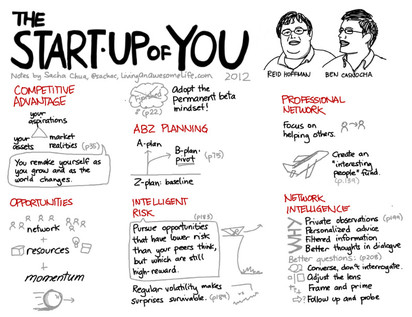 http://sachachua.com/blog/p/23203/ We all know by now about very successful launch of The Startup of You by the founder of Linkedin. It has good tips and advice for the Social Generation's job search.
But that's not my point here. I have been mulling the changes that 20 years can make in how we have careers, look for work and create our success. In 1990, Tom Peter's published in Fast Company, The Brand Called You. During the past 20+ years, people, with the help of the Internet, have figured out and mastered how to brand, pitch, promote and market themselves to get or stay employed. Everybody is on Google+, Linkedin, Viadeo, Xing, and FB pages with profiles describing their accomplishments. Many professionals (all my clients) are setting up professional websites, iPad profiles, and even Presumes. Yes, we have got the branding part down to the point that everyone is sick of hearing the word used. Unfortunately, being well branded, positioned and marketed isn't enough anymore. The Startup of You addresses the really salient career challenges that the Social Generation faces today. How do you find a job and stay employed in a global marketplace for talent where there aren't enough jobs, the competition is fierce, and everybody is a brand? Well the message is threefold:
Some reading this may say that this is all old news that is just repackaged. I don't think so. What is interesting to note is the shift in emphasis over 20 years from the sole individual with a brand to a person as part of a collective network. As we all live digital lives, building a the global village around us to support our career survival has become a most efficacious route.  What to do with QR Codes?
By creating your own QR Codes (called "qurifying") you can make whatever you want more interactive. - Put one on your business card, on flyers for a party or poster to promote your products or services. - Or use them to help sorting your books or CD's, put them on your keys or tools so you know what they are for. (from the Qurify website) Tools? Really? So I put this code on my screwdriver and I always know what it's for? Ok, I am having fun. But these QR codes are pretty cool and Qurify has probably the simplest site to use to make codes for use by the executive, professional, solopreneur and small business owner. What am I talking about? QR or Quick Response code is a bar code that can be read by an app in your iPhone, Droid or my Blackberry. Putting the code on any real life object enables it to transmit whatever information is embedded in the code. Typically most services limit you to a certain number of characters to embed in a QR code. Qurify said 255 characters but some QR codes hold up to 7000 characters.The code above has my business card information embedded in it. I used all but 37 characters of the 255. What do you do with them? Look at them as an interactive bridge between the digital universe and the bricks and mortar world. Put in the QR code information from a v-card, business card, links to Facebook, Linkedin, YouTube, eBook, a resume, and your website. Apply the code to a piece of paper, a card, a flyer, a tee shirt, a book to enable the coder reader to receive extended information about you online or any topic or site you want to send them to.. Is it worth adding to your business card, resume, and other documents? Sure, why not? You have nothing to lose and much to gain with the increased visibility. I think the best use would be to build a great website and use the QR code on the back of your business card to get networking contacts to the website's landing page. That would be the best brand message delivery compared to sending code readers to linkedin or other template-driven apps and sites. You could offer a special deal on an ebook you have written and use the code to send users to an Amazon.com page to buy it. The applications are endless. Just think of it as the simple little wireless connector between the world and the interweb. In my universe there is nothing better than leading the pack compared to following the herd when it comes to new and wonderful technology gadgets. QR codes are easy to create, and the uses are limited only by your creativity, strategic vision, and brilliant imagination. Start with your business card as code.  The tendency to hire people we know is deeply embedded into our DNA. Man (and woman) has a tribal orientation inculcated into his system since the Pleistocene cave dwellers.
Tribes working cooperatively have been integrally to commerce from the surf system of the feudal middle ages, and the guilds of the Renaissance to modern day. Fortunately our comfort with the size and number of our tribes has grown significantly beyond our nomadic/agrarian roots. Our DNA instinctual drive for belonging to the group is embedded in business processes today. In Reid Hoffman's new book, The Startup of You, he makes the point that our opportunities and business success comes from our networks e.g. tribes. Networking inside or outside organizations requires meeting people you don't know and being able to talk about yourself and find out about them. I have executive clients with minimal footprint on Linkedin expect the perfect job posting to magically appear. Building a network is not learned behavior. Growing and advancing within a big company depends on who knows you and who gets to know and like you. Those whose networking fluency is weak or not a style fit for their company culture rail against the corporate "politics" they face when they should be getting better at networking. Why is networking so hard? As much as we like to belong, we are hardwired in our DNA for a adrenal reaction of flight or fight that gives us a wariness, if not fear, of the new, the unknown, and change. Networking requires all of the above: we must change our behavior and reach out to unknown people to grow connections. It is an interesting DNA dynamic, we have move past our wariness of meeting new people in order to satisfy our drives to belong to a group (tribe). I agree with Reid, that anyone who develops fluency in networking will up their success quotient in their careers because doors are opened by people you know. The easiest first thing to do to grow your network is use Linkedin, Viadeo, and Xing to invite people to connect with you. It is a great start on instantly building your a base of hundreds if not thousands of contacts. The next easiest step is to start attending events: professional associations, conferences, trade shows and alumni groups to meet people. Google+ has the quality of adult audience that Linkedin has with the ease of conversation, collaboration and connection of a Facebook. But, it has an interface and setup that is 100 fold better. Currently by invite only, if you know my email address request an invite from me, it has over 20 million users. At that rate it will reach 100 million in 5 months. It took linkedin.com 5+ years to do that. Watch this fun video for a compelling argument why you should join now not later. |