 Forbes List of Top Agribusiness Startups Got an udder infection? EIO Diagonistics uses iPad software that can detect it automatically. This and many more examples are highlighted in Forbes Magzine's top 25 most innovation AgTech companies. Other examples include oil seed from an heretofore unknown plant and neighborhood indoor farms:
Terviva: An Oakland-based company that is cultivating the pongamia tree, which is native to Australia and India, in Florida, California and Hawaii. The trees produce an oilseed with 10 times more yield than soybeans and have the potential to create a biofuel alternative. Ag cred: Startup has raised more than $20 million. Plenty: Plenty is an indoor farming company utilizing machine learning, artificial intelligence and crop science to optimize yields and give produce exactly what it needs to achieve optimal freshness and taste. The tech applications of IoT, robotics, machine learning, sensors, and AI is now growing in the warp and weft of our economy fabric. Forget Facebook, Uber, Houzz, Pinterest. This is the new territory for jobs. Perhaps a dual major in biology and computer science?
22 Comments
 Sometimes it seems nigh impossible to move the dial on an established, but obsolete, traditions like applying to a job posting and spreading your resume all over the Internet to find a job. The article below confirms this with statistics. It doesn't matter that more management and executive level professionals get hired through their networks than through job postings annually. That executive search consultants account for less than 10% of the executive positions placed annually in the USA. It doesn't matter that even before anyone sees your resume, they will see your social profile first. And, even if they get your resume first, they will look you up on Linkedin and search you out on Google to get tmore depth about you. And when they find something they don't like online, more than 50% of the recruiters surveyed say they drop you from their candidate list. People persist in using their resumes to apply to job postings. Why? Because it has always been done that way and because when it comes down to the actual interview, HR wants some kind of document to provide to hiring managers for reference. When will the transition to social profiles and personal websites take hold? If Linkedin has anything to say about it, it will be sooner not later. LinkedIn survey details 'new norms at work' Matt Kapko May 8, 2015 A new survey of 15,000 LinkedIn users with fulltime jobs, 1,000 of which reside in the United States, draws some interesting conclusions while also reinforcing common perceptions about the "new norms" within the modern U.S. workplace. More than a quarter (26.6 percent) of the people from the United States who were surveyed said it's important to maintain separate social media profiles for work and personal. One in five U.S. respondents (20.5 percent) said they make initial impressions based on a person's online profile picture. And one in 10 respondents said they worry about what their colleagues may think of them based on content they shared on social networks that may not seem professional, according to the survey, which was conducted by Censuswide for LinkedIn during the first week of April. Catherine Fisher, LinkedIn's career expert, says the findings stress the fact that people need to be mindful of how they portray themselves on social media. The U.S. responses also highlight notable difference between women and men in the workforce. Almost a third (30.9 percent) of women respondents said they are friends with colleagues on non-professional social networks, while only 16 percent of men said the same. Nearly a third of the women (32.5 percent) feel as though they're judged by what they wear to work, and more than a quarter (26.8 percent) said they believe men have it easier when it comes to the threads they don at work. And more than four in 10 women (41.6 percent) said they tend to dress up more when they have meetings during the day, while only 25.5 percent of the men step up their dress for meetings. Work experience, education and volunteer history are the three top factors U.S. users weigh to gauge a colleague's LinkedIn profile, according to the survey. More than one in five (21 percent) of those surveyed from the Unites States said it's more appropriate to self-promote now on social media than in years past. Almost 13 percent said they feel more comfortable sharing their opinions on industry matters via social networks, and nearly 9 percent think doing so is a great way to raise their professional profiles. Perhaps most surprising of all is that only 12.8 percent of U.S. respondents think a good LinkedIn profile is just as important as a good resume.
C Is For Silly: The New C-Suite Titles
by Genna Goudreau Excerpt: ...Peter Cappelli, management professor at the University of Pennsylvania, says the new titles are meant to signal—internally, to customers or to governments—that a particular function or task is important and that the people at the top are listening. They may also be a form of ego appeasing and identifying who the important senior people are. “The main question,” he says, “is whether there’s any real substance behind them.”... Read full article here. Scott Brinker's marketing technology blog is a wealth of information and data on all the tools related to marketing and sheds light on the newest C-level job creation, the Chief Marketing Technology Officer. Read the blog and find out more. Maybe your next career move would be in this direction. 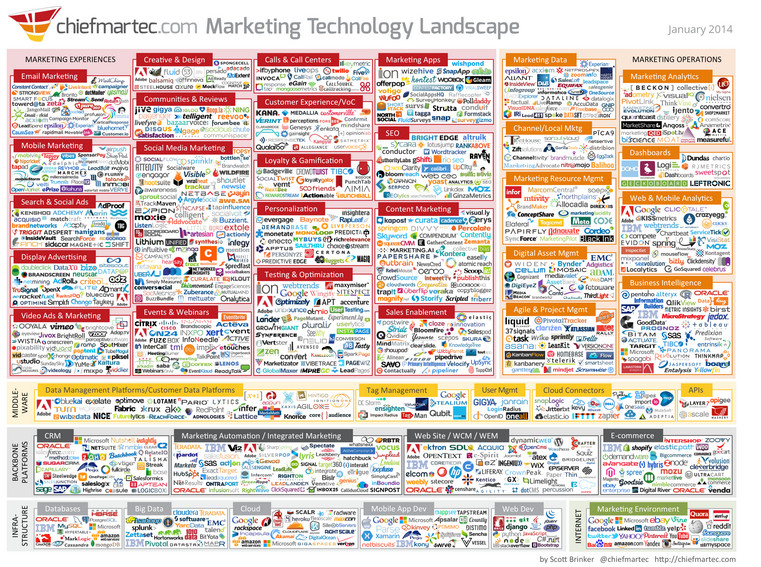  This article in the ERE newsletter, written for HR and recruitment is even more true today. With the job market heating up, and recruitment focusing on digital profiles and information, a resume for most, but the highest executives, just gets in the way.
Why “Name-only” Employee Referrals Produce Dramatic Results by Dr. John Sullivan Oct 29, 2012, 5:42 am ET Employee referrals provide the highest quality and the highest volume of hires, but you won’t receive as high a level of results if you don’t minimize roadblocks to referrals. Requiring a current resume for employee referrals is a major “under-the-radar” detriment to reaching the goal of having referrals exceed 50% of all hires. Requiring a resume to start a referral process might not seem like a big deal (because the resume is “the currency” of recruiting) but it can be. Although “active candidates” all have current resumes, employed people who are not actively looking (some people call them passives) don’t have an updated resume available and they may have little interest in creating one. Requiring an updated resume in order to move forward slows down and occasionally stops employee referral efforts. Consider an alternative approach, which is offering an option to employees, so that all they must submit is a prospect’s name and contact information in order to begin the referral process. This approach is known as a “name-only” referral. read full article here  After reading the article below, I could only agree. Of course companies want to hire great people, and they do have a key set of attributes that they look for.
But how do they really go about finding these A Players? They sure don't ask you in an interview, "Are you a self-disciplined, champion with foresight, and a drive to compete, who operates at high integrity?" The A-player college screen starts before the interview, way before, as in what is your GPA, SAT score, leadership participation on campus, and the pedigree of your degree and college? The last one is the biggie. And, how much work experience do you have in your chosen field, as in years not days or months. Seriously, the degree alone won't do it. That's for new grads. If you are a seasoned professional as an A-player, you will need to be employed (not self-employed or unemployed), in an identical position and equivalent level to the company's opening. You will be working already in the company's business domain or industrial sector. Finally, do not be looking for a job, as they do want to find you. How to they screen for the characteristics below? Well if they are smart hiring companies they will do 3 things to all hires: new grads to experienced executives.
Forbes Magazine: The Five Characteristics Of An 'A' Player For many startups, hiring the best and the brightest is not an option — it’s an absolute necessity. You’ve probably heard this sage, albeit generic advice before: “Only hire ‘A’ players.” Of course! Who doesn’t want “A” players? Who doesn’t want people who have the talent, skills and drive to make a company successful? But the real question is: Can you recognize a top performer when you meet him? We all like to think we can, but even the best can overlook real talent. Think back to Facebook and Twitter. Both companies failed to hire Brian Acton, cofounder of WhatsApp, which was recently acquired by Facebook for $19 billion. Mark Zuckerberg, founder and CEO, shows off the new messaging system in Facebook. (Photo credit: Wikipedia) Simply put, “A” players are great competitors. Avoid overlooking one in your midst by understanding these five characteristics:
What characteristics have you found in your best hires? Mary Ray is the co-founder of MyHealthTeams, which just closed a Series A round. She is always on the lookout for A-players. She drives the product vision and product development of all the MyHealthTeams’ web and mobile applications, oversees marketing, UX, design. The Young Entrepreneur Council (YEC) is an invite-only organization comprised of the world’s most promising young entrepreneurs. In partnership with Citi, YEC recently launched StartupCollective, a free virtual mentorship program that helps millions of entrepreneurs start and grow businesses. Read article here This is compelling data that shows a clear direction for people to take to pursue viable global employment. What the slide deck fails to address is that projected lack of employment opportunities regardless of how trained and prepared you are. At the World Economics Forum in Davos, 2012, the then CEO of Citi Bank declared that by 2020 the world would be 400,000,000 jobs short (read here).
The bigger issue address is not required skills and training but who will have access to opportunity and where? Interesting comparison between now and soon to be. Read the full article here
 Top 10 Tech-Influenced Hiring Trends for 2013
How Today’s Tech Trends Translate to Talent By Kathryn Ullrich 1. Renewed Focus on Innovation Now more than ever, rapid advancements in digital interconnectedness, big data and other technologies mean that tech companies need executives who can innovate and envision the next generation of users and devices. We’re seeing this even from leading tech industry clients who are already innovators but realize that innovation requires constant attention and reinvention. Execs who can see beyond today to visioning the future are in high demand. 2. Strategic Nimbleness Rules Working in Silicon Valley for early stage companies requires what I call "strategic nimbleness" – the ability to take a business model and adapt it to what the market is saying now. I’ve handled some VP Sales and General Manager searches recently where the company believes it understands the sales model and why customers are buying. But the company may need to strategically pivot a product and/or sales message based on the latest marketplace learnings. Entrepreneurial companies need executives who can strategically pinpoint new opportunities and then execute for results. 3. Emphasis on Selling Services I’ve long specialized in finding executives who can sell services for consulting company clients who place a premium on strong skills in this area. Most tech salespeople are experienced at selling products or software applications. But as more tech firms start offering high-margin information-based services, companies are seeking sales execs who know how to sell them. It's a different animal requiring hybrid skills of a consultant who has installed services and who can communicate their value to customers. Today’s most in-demand sales execs know how to sell both products and intangibles. 4. Analytics Acumen a Must Companies now have huge amounts of customer data available to help boost targeting and efficiency. That puts a premium on execs who truly understand analytics, and – more importantly – know how to use data-based findings to improve performance. Whether the field is general management, marketing or engineering, executives who learn how to harness data analytics will have a bigger role going forward. In my view, marketing – typically a non-tech function in the past – will become an increasingly technical role based on an explosion of marketing analytics. 5. Social Media Marketing Goes Next-Gen Marketing executives must keep pace with the changing digital landscape of web advertising, social media, SEO/SEM, and myriad of new owned, earned and paid marketing channels and techniques. One VP Marketing tells me she reserves budget specifically for advances she doesn’t yet know about. Companies are well beyond simply trying out Facebook, Twitter and other social platforms. Now it's about turning engagement into sales. The only sure thing is that social will keep evolving. 6. Enabling Technologies Hold Sway During the California gold rush, the suppliers – or enablers – made the most money. In similar fashion, various tools and technologies that support and amplify the Internet and social media will be the "pick axes" of our connected world. Executives understanding and producing these enabling technologies will continue to derive value rather than competing for the next generation of users. 7. Execs Embrace Gamification A half dozen years ago, one CMO candidate distinguished himself by finding innovative ways to market through cleverly imbedded games and product placements deep within targeted search results. Now we even see companies such as Salesforce adding gamification in the form of badges for increasing sales. With millions of casual gamers and a growing percentage of those paying for games, executives who understand gamification can find ways to increase revenue through this mechanism. Who knew countless hours of game-playing could pay off? 8. More Asia/America Leadership Connections With China’s explosive growth and Silicon Valley's already strong manufacturing relationships with Asia, I’m seeing a lot more inter-region hiring activity. Several multi-billion dollar Asian companies have engaged our firm to start or enhance Silicon Valley offices. And we’ve been hired to find Asian Americans to fill critical leadership roles in Asia for US-based firms that want US-style leadership skills infused into an Asian office. I’m already brushing up on my college Mandarin! 9. Resume Keywords Get Real Companies look for talent by searching for resume keywords such as cloud, SaaS, Big Data, mobile applications, etc. But some candidates go overboard with job titles saying, for example, "VP Sales Cloud Computing" in 2000 – long before the term cloud computing was ever used. I find it’s better when executives list the predecessor technology they worked on. My advice is to use “software defined” language such as client server, thin client, hosted software or others. It shows me – the recruiter – that you understand the underlying business models. 10. "Value-Based" Interviewing Takes Hold Interviewing can be subject to trends and has, itself, moved beyond behavioral and case interviewing. The trend now is toward probing the specific value a prospective candidate can bring to the company. What would the candidate do today? At the executive level, candidates should have a well-defined point of view on what skills and experiences they bring that can make a difference. Companies are asking candidates to present a 90-day business plan for the job. Candidates may weary of providing "free consulting" but that’s the new price of admission. Current Searches Kathryn Ullrich Associates' recent search work has included a VP Sales for a hosted software company, VP Sales Cloud Computing for a $35 billion technology company, Regional Sales Director Asia Pacific for an electronics distributor, and VP HR for an ecommerce company. We are currently working on the following searches:
For more information, visit www.ullrichassociates.com. Kathryn Ullrich Associates, Inc. focuses on C-level, VP and Director hires across the functions of Sales, Marketing, Product Management and Consulting for technology and services companies. News Kathryn Ullrich and Getting to the Top have been quoted extensively in the news this past year! Read details at http://www.gettingtothetop.com/MediaKit.aspx Follow us… Twitter at http://twitter.com/GettingtotheTop LinkedIn at http://www.linkedin.com/in/ullrich, and Facebook at http://www.facebook.com/gettingtothetop. More Information For more information on Kathryn Ullrich Associates, Inc. and our executive recruiting services, please call 650-458-8775, email kathrynu@ullrichassociates.com or visit www.ullrichassociates.com.  TalentBin Takes On LinkedIn By Targeting Recruiters By David Zax | January 14, 2013 .....That’s because TalentBin doesn’t compete with the services LinkedIn offers to the average user. Rather, TalentBin competes with the behind-the-scenes services LinkedIn offers a very specific, and lucrative, segment: recruiters. You may not have known this, but LinkedIn makes the majority of its revenue by serving recruiters who want to scoop up talent for their companies. In the third quarter of 2012, fully 55% of the company’s revenue came from what LinkedIn calls “Talent Solutions.” (Premium subscriptions, by contrast, only make up 20% of revenue.) LinkedIn largely achieves this by digesting resumes into what Kazanjy calls “this master database that recruiters pay a pretty penny to essentially get God rights to.” TalentBin digests data from ... many others. For hackers, it stalks sites like GitHub or StackOverflow; for designers, it scans the likes of Dribble and Behance. It even trolls the U.S. Patent Database, looking for inventive types. Most recently, says Kazanjy, the team “indexed the entirety of the PubMed Life Sciences Publication Directory,” some 20 million articles, to glean information about talented medical researchers and their interests. “It starts to show this approach doesn’t just work with software engineers,” he says. “It also works with physicians, researchers, biotech people, and so forth.” That project was just completed in December. Gradually, TalentBin has built a “search engine for people,” as Kazanjy puts it, one which he charges $6,000 per year for the privilege of accessing (undercutting LinkedIn’s reported price tag, which can climb to $8,000). Read more While TalentBin may nibble at the edges of Linkedin to do specific, niche searches for gurus in the esoteric fields, Linkedin is a runaway train for talent search. The reason is that recruiters for less esoteric positions like the interactive search of Linkedin. They like being chased by candidates who may turn out to be a good fit for something. Recruiters like developing a "presence" online and a following. That makes future, non-esoteric, searches easier and quicker. One of my executive clients literally went from 50 to 600 connections in less than a month by sending invites to recruiters in all of the 50 groups he had joined on Linkedin. Recruiters never turn down your offer to connect. We pushed him past the magic 500 number and made him look well-connected virtually overnight. Once he was over 500 then professionals he did not know more readily accepted his invitations to connect as they perceived him as a valuable networking contact. People like communities, even recruiters, which explains why Linkedin groups, even with all their spam, are so popular. The only recruiting category killer lurking on the horizon is Facebook. And it's method for data capture has to be improved to give Linkedin a run for its money.  If you can’t get into a top-five MBA program, don’t even bother
By Jay Bhatti — January 15, 2013 Jay Bhatti is an investor and advisor to startups in New York City. Previously, he was the co-founder of the people search engine Spock.com. He also worked as a product manager for Microsoft. In 2002, he received his MBA from the Wharton School. Read more. The extent of his understanding about MBA is limited by his elitist world view. His main complaints are:
So, why get an MBA? For the network. Yes, the network. Example, UCLA is not in Jay's top five but it has over 30,000 alumni out there to help you with introductions, resources, access to opportunities, and career advice. That network doesn't become obsolete over time, better still, it keep on growing. You are buying a built in database of connections better than whatever Linkedin can do for you. Your fellow alumni are all invested in your success as much as their own as you will reflect back well upon them and the alma mater. How should you pick the MBA school? By the numbers. How many total graduates are there? How many in the geographical area of your preference. Example, most UCLA MBA alumni are in Southern California. How many are in the field or industry of your preference? Some schools are known for finance and accounting vs marketing and management. Do not pick an online school and degree as there is not enough connection and loyalty to the school to be good for networking. Pick a big enough school so that you have ample selection. Example, my degree from JFK University in Career Development was so small and niched that I practically know everybody in the alumni pool. Is an MBA worth it? If you want a career in business, yes, as a bachelor's degree is now the equivalent of a high school diploma for entry into the world of work.  A headhunter by definition is an employee or an external vendor who works to search, source, identify, and place the best possible available talent fit into a company's job opening.
Known as HR staffing, contingent recruiters, and employment agencies, they are paid by the companies who engage their services to hunt talent for them. Hence the nickname, headhunter. Everybody knows this, right? Why is it that headhunters are too often the first avenue used by professional and executive job seekers especially when unemployed? They are the least helpful resource when trying to make a big career transition. They are the most helpful when you are looking for the exact same job, industry, and position level in a different company. Most people are not. The reason why we have this knee jerk outreach to search firms is habit long ingrained into us. Our first experience with any kind of recruiter is when they appeared on campus to recruit new graduates and interns. They hosted pizza nights, gave away bling and cool toys at career fairs. They got some of us our first jobs. We make mistaken assumptions about them due mainly to a long, satisfactory history and pattern of relationship with them. Often, it was a headhunter who lured us out of a current position and into a new opportunity. In time, we used their help to fill our open openings. They continued to cultivate relationships with us as we grew in title and responsibilities. It is the the nature of their business. It only makes sense to let them know that we are looking when it is time for us to move on. But, don't assume that they may actively work in our behalf to help place us by way of reciprocity. Sometimes they will try to help but we cannot expect that they will act to our benefit. We tend to lose an objective perspective of the demands made upon them by their corporate and organizational clients. They are looking for the absolute best fit for a position in terms of industry background, professional experience and position level. Transferable skills are not a significant factor because they don't consider someone making a career transition the best possible fit for a position. Yes, the whims of the economy affect all hiring, as a headhunter may have the perfect position when we aren't looking or desiring to make a move. Timing is everything. Do make connections with headhunters, but don't expect what they simply may not be able to deliver...a job.  ResumUp is a new tool that is a graphically social based view of your experience and talents. Whew, graphically-social based, now that's a mouth full. But how do you describe the new image driven content style of cloud apps coming up online now?
It is an interesting concept and of course it remains to be seen how they will monetize this but I like the look. Hint, sign up using your Linkedin profile not Facebook as it populates the data fields from the site you choose. I am not sure I would want a future employer to take a look at my credentials presented in this fashion. However, the resume is a dying breed we need to stay ahead of the curve and manipulate these tools to our advantage. If you want to sign-up for the free best click here. Author and New York Times columnist Thomas Friedman discussed job opportunities, the growth of the global middle class, and an outfit in Jordan that's launching scores of new businesses. He spoke May 10, 2012, at the Stanford Graduate School of Business' View from the Top Series.  The tendency to hire people we know is deeply embedded into our DNA. Man (and woman) has a tribal orientation inculcated into his system since the Pleistocene cave dwellers.
Tribes working cooperatively have been integrally to commerce from the surf system of the feudal middle ages, and the guilds of the Renaissance to modern day. Fortunately our comfort with the size and number of our tribes has grown significantly beyond our nomadic/agrarian roots. Our DNA instinctual drive for belonging to the group is embedded in business processes today. In Reid Hoffman's new book, The Startup of You, he makes the point that our opportunities and business success comes from our networks e.g. tribes. Networking inside or outside organizations requires meeting people you don't know and being able to talk about yourself and find out about them. I have executive clients with minimal footprint on Linkedin expect the perfect job posting to magically appear. Building a network is not learned behavior. Growing and advancing within a big company depends on who knows you and who gets to know and like you. Those whose networking fluency is weak or not a style fit for their company culture rail against the corporate "politics" they face when they should be getting better at networking. Why is networking so hard? As much as we like to belong, we are hardwired in our DNA for a adrenal reaction of flight or fight that gives us a wariness, if not fear, of the new, the unknown, and change. Networking requires all of the above: we must change our behavior and reach out to unknown people to grow connections. It is an interesting DNA dynamic, we have move past our wariness of meeting new people in order to satisfy our drives to belong to a group (tribe). I agree with Reid, that anyone who develops fluency in networking will up their success quotient in their careers because doors are opened by people you know. The easiest first thing to do to grow your network is use Linkedin, Viadeo, and Xing to invite people to connect with you. It is a great start on instantly building your a base of hundreds if not thousands of contacts. The next easiest step is to start attending events: professional associations, conferences, trade shows and alumni groups to meet people.  Is it fear and loathing? Being a creature of habit and learned behaviors? A lack of imagination? Or do we just tend to just take the path of least resistance?
All of the above, depending on the individual. What qualifies as low hanging fruit when it comes to job opportunities?
We are creatures of habit and learned behaviors so if you got recruited out of college and search people "placed" you in all your jobs, then we assume the past predicts the future. It doesn't in career advancement. As we climb to the top, there are fewer jobs and the competition is fierce. We don't just get "placed" as easily. And as we age, there is younger, less expensive talent competing for the same opportunities. Your business sector may become commoditized and there is no room to grown professionally. We don't realize that the best fruit can be harder to find, be at the top of the tree or hidden under leaves and branches. Often our mentors, bosses and colleagues can be our undoing. They may as they move on bring you with them but that may not be the best option for you. I have seen professionals in a beleaguered companies and business units actively solicit their colleagues to join them. Did misery need company? Did they want to be rescued from their drowning struggles? Were you misled or did you just not even expend the effort to find out about the mess you were getting into? When we buy fruit at a stand or market it is often green and unripe, or bruised in the picking. Today, the savvy professional, especially if not having conducted a search in the past 5 years, must:
 Despite four years since the global crash and 9+ since Linkedin was born, many executives and professionals haven't grasped the full impact of a reset economy and the Internet on a job hunt.
Here are some the most common ill conceived notions that I hear: 1. Being on Linkedin will bring job opportunities to you. There is a common belief that if you build your profile, then the recruiters will flock to you. Well, most likely, your Linkedin profile will give you a boost on Google ranking in a name search. Solution: The big value of Linkedin is the access you get to networking in 50 groups and 50 subgroups. Rather than waiting to be found, build your Linkedin connections into thousands for ongoing leverage. 2. I customize my resume for every position and opening. Good luck with this one because they will all have to synch your one Linkedin profile. For that matter, all your profiles on Viadeo, Xing, Linkedin, Orkut, etc should all deliver the same message about you. Solution: Focus your search target on one or two overlapping business domains. Gear all your branding and positioning of yourself around those sectors. 3. The search firms don't get back to me or they have nothing for me. Search firms more than ever are working to find the perfect fit for their client companies. Given that their business is down by more than half since the crash, the demand of top talent continues to exceed supply. Unless you exactly fit their requirements, you will find no opportunities forthcoming from them. Solution: Using search consultants and headhunters as a source of information about market trends and companies hiring would provide more fruitful results. 4. My continued outreach to my network is wearing out my welcome with them. Don't use up your direct network by continuous asking for introductions to job openings. When those turn up empty, or as dead ends... and they mostly do... then your network is exhausted. Solution: Double or triple your network by using your existing connections for introductions into their network. This grows a relevant source of contacts in your field without much effort. 5. My employer will suspect that I am looking if I am highly visible on the Internet. I am still surprised by how much that concerns people when millions are on social networks now. Just do an advanced people search on Linkedin by your company and competitors. You will find more than you expect. Solution: Get on the Internet with gusto because you only have to do it once. Put up profiles. Build a website and blog. Become visibly well branded and be done with it. Once you are on it, that becomes old news. 6. Since I am not willing to relocate, I am looking only at local employers. The market place for talent is now global and your competition can come from anywhere thanks in part to the Internet and to the willingness of professionals outside the USA to seek opportunities anywhere. Solution: Search globally and work locally. You cannot determine who or where your next employer will be. You can negotiate the details like location when they make an offer. 7. I don't need to be visible online as my job is secure and I am happy in my current situation. Nowadays all marketing is online. Look at every Superbowl ad for its references to product websites. Professional advancement, and career promotion are done equally outside your organization as within. Solution: The professional status you build for yourself outside your company reflects positively on you and your organization. Making a name for yourself is most easily done online.  In a recent BlueSteps study of over 100 senior executives working in China, seventy percent stated that executive pay had become more competitive over the last 5 years, and 89% indicated their intent to stay in China for over 3 years. The majority of respondents were expats working in China (77%), in general management roles including CEO/COO (63.4%), earning over USD $150k (74%).
In a comparison of six nations, senior executives ranked China as the fourth highest paying country, ahead of other emerging markets, Brazil (5th) and India (6th), yet behind developed nations Germany (3rd), UK (2nd) and USA (1st). 70 percent of respondents indicated that compensation in China has moderately or significantly increased in competiveness in the last 5 years. "BlueSteps is the exclusive service of the AESC (Association of Executive Search Consultants) that puts senior executives on the radar screen of over 8,000 executive search professionals in over 74 countries. Be visible, and be considered for up to 75,000 opportunities handled by AESC search firms every year. Find out more at BlueSteps. " As a career consultant for BlueSteps, I can offer you a 20% discount on the one-time membership fee. BlueSteps, a resource for senior executives, provides a wealth of resources in addition to access to the top search consultants worldwide. To join BlueSteps and receive the 20% discount, just click on the this registration link https://www.bluesteps.com/Registration/Default.aspx . When you get to the purchase page, input the following code: PattiWilson20. Your membership fee will be discounted by 20%. BlueSteps is well worth the one-time fee and you can receive a free consult from me as part of the package.  I have been working with top executives worldwide as well as in Silicon Valley for a number of years now. They are primarily employees of the big multinational European and American companies. Some are Americans, most are not, and many were educated in the USA at a top business school. The vast majority of them are not company "lifers" in that they haven't been with the same company for years, but have job hopped from company to company and country to country.
A Silicon Valley executive called me the other day thinking he needed to make a job move. His company (a top Fortune 500 software provider) was insisting that he take a promotion and 4 year transfer with his family to China. With a Chinese wife and his two small children becoming bi-lingual, this would have been a good experience for the family. He is in finance and the role would have been at the country level running all operations. It was a plum assignment. With Asian experience, he would be able to attract the best global opportunities from other corporations after this assignments. It took much refection and research before he convinced himself to take the opportunity and see it as such.  The World Economic Forum ended on a dark worried note about the future of the worldwide workforce. The Davos gathering didn't doubt the numbers or projections. It is the means to the end that gave them consternation.
According to Vikram Pandit, CEO of the global bank, Citigroup Inc., "The world needs 400 million new jobs between now and the end of the decade, not counting the 200 million needed just to get back to full employment, so "that should be our number one priority". It is not a simple scenario to just materialize 600 million jobs in 8 years. It is a real and dire problem with the nothing less than the world economy at stake. The financial leaders and heads of corporations spent time finger pointing across national boundaries, but they came away without a tangible solution how to grow worldwide GDP and therefore jobs. That there is no concerted and coordinated global response to a looming work crisis may indicate a fundamental problem with how our worldwide economic system functions with implications that impact all class and economic levels. We Aren't Entitled to Work? Is there such a thing as a right to work in a free market, capitalistic, global economic system? Are we as a population in the USA entitled to earn a living if we are sound of mind, able bodied and skilled? It was easy to ignore this issue when unemployment numbers were composed of the poor, uneducated and unskilled. However since 1980, every recession has generated unemployment creep upwards from manufacturing, to white collar, to now the executive suite. This has resulted in a substantial ongoing dislocation of the socioeconomic structure of the US population . Today the 12+ million "officially" out of work is about the size of Illinois and that fails to account for the underemployed and those not looking. At the same time, the employment agency, Manpower, reports that 75% of its revenues are now from outside the USA. In America, we know where the jobs have gone and continue to go-- elsewhere. But that begs the question as there still won't be enough work to go around worldwide with an emerging, educated, skilled, global middle class. Are we entitled to earn a working living at the expense of another somewhere in the world? Doesn't everyone deserve the opportunity to make a contribution and be paid for doing it? The essence of work is contribution. You do a day's labor and are paid a living wage. But what if there is not enough work to go around anymore? Does that mean that those that want to work and can't find it are facing life as an underclass of people who are going without the basic necessities of survival, and are deprived of being contributing members of society? Will work, especially highly skilled, intellectual work, become an entitlement or privilege? Wherever you are in the world, you got your job because of a set of advantages. Call it luck, fate, geography, position, status, connections, or price-point. The others who missed out on the opportunity didn't quite have your unique set of advantages but they were just as smart, talented, hard-working, earnest and yet unemployed. 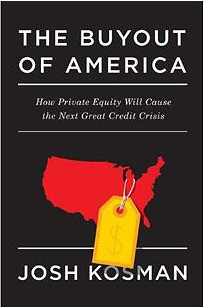 Private Equity firms own companies that employ 1 in 10 employees in the USA making them the nation's largest employer. They own across all sectors including Harrahs, Hostess, Clear Channel, Energy Future Holding Company, AMC Movies.
How did the protestant work ethic of Sweat Equity get replaced by the Blood Equity of the leveraged buy-out? No value is created, other people's money is used to buy companies and the resulting profits are gained by corporate dismemberment, divestiture, and downsizing. This is the premise a new book by Josh Kosman, a veteran financial reporter and the author of The Buyout of America, How Private Equity is Destroying Jobs and Killing the American Economy. There is no point in turning this into a debate about the function of private equity given that it is now a phenomena that is well integrated into the warp and weft of the financial landscape in America. However, it is always wise to explore the career possibilities this portends for professionals and executives. What are the opportunities? Start-ups What are the employment opportunities that present themselves? Well, for starters, private equity firms have become very involved in start-up investments. Start-ups have always been the domain of the Venture Capital firms. But they have been hard-pressed to fund new ventures in the past several years. They lost investors initially after the crash and then they have been preoccupied with keeping their current farm of companies afloat. Private equity offers an alternative funding source for budding entrepreneurs for long-term funding.  As the saying goes you either have lunch or be lunch. When Kodak filed for bankruptcy restructuring, I wept over my vintage Brownie and played the Kodachrome lyrics by Paul Simon:
Kodachrome You give us those nice bright colors You give us the greens of summers Makes you think all the world's a sunny day, oh yeah! I got a Nikon camera I love to take a photograph So Mama, don't take my Kodachrome away What can executives and professionals take-away about from this? Why does a company have talented teams who create bleeding edge products see failure because executive management fails to capitalize on it? "Through the 1990s, Kodak splurged $4 billion on developing the photo technology inside most of today's cellphones and digital devices. But a reluctance to ease its heavy reliance on film allowed rivals like Canon Inc. and Sony Corp. to rush largely unhindered into the fast-emerging digital arena. The immensely lucrative analog business Kodak worried about undermining too soon was virtually erased in a decade by the filmless photography it invented." This is from an article by Ben Dobbin for Associated Press. The article went on to quote: "If you're not willing to cannibalize yourself, others will do it for you," said Mark Zupan, dean of the University of Rochester's business school. "Technology is changing ever more rapidly, the world's becoming more globalized, so to stay at the top of your game is getting increasingly harder." Read more here Like Kodak, Xerox PARC (now just PARC) invented but never capitalized on the Graphical User Interface that made the personal computer a tool for the masses but Apple did with the Macintosh. Sony and Canon capitalized on Kodak's digital camera breakthroughs. Other sector leaders have met with the same fate such as RIM and AOL. These companies were all market makers yet lost out to the competition by a failure to adapt, transform and innovate. Certain people have management styles that tend to be risk averse and impede the growth and expansion of the company with a "let's not get ahead of ourselves" attitude. They need too much proof and they take too long to make the right decision in the face of market movements. They lack a capacity to see beyond their self-imposed company rulebook, and, worst of all, they fearfully protect their next quarter profits by keeping dated products alive too long. When a sector is moving, like the global economy, at the speed of light agility and flexibility are essential skills. Keeping up is not sufficient when getting ahead is in order. The same holds true for individuals. We must continually evolve and respond to organizational, market and economic changes. Knowing when to get out and move on is insufficient if you don't do it. Executives that do not embrace the trends of today will have the marketplace pass them by because of risk averse and dated views regarding their own career advancement.  Why are professionals so easily convinced that if they add on one more certification or degree they will somehow be more employable or desirable? My field is among the biggest offenders and first initiators of this practice that includes the breadth of services consulting: management, projects, counseling, coaching, IT, financial, etc.
I don't mean certifications in technical, scientific tools and methodologies. I am speaking to certifications that fluff up one's perceived expertise, importance and value to the marketplace. Just to name a few in my field as it's so easy to find them, but I am sure you can find them in yours as well: Master Career Counselor (MCC), Professional Certified Coach (PCC), National Certified Career Counselor (NCCC), Master Personal Branding Strategist, Board Certified Coach (BCC), Career Management Fellow Practitioner (CMF), Career Development Facilitator Instructor (CDFI), Distance Credentialed Counselor (DCC), Master Resume Writer (MRW), Credentialed Career Master (CCM), Certified Employment Interview Professional (CEIP), Certified Job & Career Transition Coach (JCTC) Let's take my favorite the Distance Credentialed Counselor. Since I work with clients all over the planet, I use a phone, SKYPE, a web-cam, web meeting sites, and file sharing tools. Does that require a certification? Really? Or do you just need a good IT person to set you up and provide tech support? Here is how the certificate is described: A Distance Credentialed Counselor (DCC) will be nationally recognized as a professional with training in best practices in Distance Counseling. Distance Counseling is a counseling approach that takes the best practices of traditional counseling as well as some of its own unique advantages and adapts them for delivery to clients via electronic means in order to maximize the use of technology-assisted counseling techniques. The technology-assisted methods may include telecounseling (telephone), secure email communication, chat, videoconferencing or computerized stand-alone software programs. Those unique advantages are further described as flexibility, convenience and asynchronous communications. Okay, but do you really need a certificate? The phenomena is epidemic in professional services today because enterprising people in an industry discovered that the best way to make money is to sell certifications, products and tools to other professionals. Industry trade associations and Universities extension program certifications have blossomed into a hundred million dollar cash flow based on revenues from tuition and their profits help underwrite programs within the organization and the university. At least, we can know that there is an academic, knowledge-based foundation to these programs with the organization or university's brand at stake. However, all this has been been eclipsed by enterprising professionals who leverage a certificate out of their business and books...often not even that much. For example, a business colleague extended his consulting practice on product management to tools, online training, books and now a certification. The degrees Competing for a piece of one pie leads all of us to try and get an advantage, but branding differentiation is not best done solely by degrees (or certificates)...no pun intended. The Mountain Dew soft drink brand dissolved a legal challenge from a customer who claimed a mouse was found in his can of the "Dew". The company argued that would not be possible as their product would have dissolved the mouse in less than a week. Coca Cola has the same reputation with pennies.
This does not explain why I continue to drink this stuff but it does make an analogy to the act of appreciating. When we appreciate and acknowledge others it has the same corrosive effect on rancor, resentment and grudges as the dissolving of a mouse in a cola can. Appreciation dissolves low morale, under performance and obstructions inside a company. This article in the Harvard Business Blog describes this in more detail. One quote sums it up how appreciation is an antidote to a toxic organization: "The impact of negative emotions — and more specifically the feeling of being devalued — is incredibly toxic. As Daniel Goleman has written, "Threats to our standing in the eyes of others are almost as powerful as those to our very survival." Read the entire article here.  Being unemployed at the C-level can be the kiss of death. Of course, I have been accused of exaggeration and hyperbole, but not in this case nor by executives in that situation. They tend to confirm that finding a new similar position can be seemingly an insurmountable challenge.
I am not referring to the nose-bleed section of CEOs that collect a king's ransom in severance after they are let go such as the CEO's of HP, Burger King and New Yorks Bank Mellon. They can afford to retire or buy their own company. The early (50 something or younger) CEO or c-level executive is usually not in that position. The serial CEO, CIO, CMO needs the next opportunity as much as wants it. How do you continue to look viable after losing a C-level job and better position yourself for a new opportunity? It depends on your net worth and network. Some of the ideas suggested here require significant capital while others rely on a substantial Outlook database of connections. Your age and geographic location can be a determining factor as well. Obviously the ideal scenario is a job lost due to an M&A or buyout with no negativity that trails after you. The biggest pitfall with that scenario is that it happens often in a sector where acquisitions are driven by industry commoditization. Thus, executive career options are limited going forward as the positions are correspondingly eliminated as well. And you can't count exclusively on executive search firms despite prior placements through them. Many executives report that search consultants unfortunately cannot consider them or do so as a last resort because typically their clients are expecting that the position be filled by a candidate who ideally matches all requirements, including current employment. However, if you still want skin in the game and crave the next challenge of running an organization, then here are potential strategies to pro-actively, and as triage, mitigate the damage of a lost C-level position to your career. Be on Boards You can't do this soon enough in your career. Start early and at lower levels to work your way up while you pick up valuable networking contacts along the way. Don't wait to be CEO to entertain the idea of a board-level appointment. Many start-ups, and small companies seek out top executives across multiple business sectors to fill their board positions. Typically, these are paid in stock vs stipend or salary. Board positions are worthy to assume a greater role at the top of your CV to fill in for a current lack of employment. The network derived from it will help open doors for your next opportunity as a board member or executive. Found Your Own Company or be a Serial CEO Serial CEOs actually are plentiful in the world today. The magic ingredients to making that happen are an outstanding network of colleagues who help to open doors. There must be available doors to open which requires a growing not contracting sector. Lacking that, the ability to expand beyond your original sector and move into adjacent industries is crucial. A key to staying relevant, current and therefore, employable is your willingness to expand beyond a sector comfort zone to take on challenges in affinity and tangential sectors. The other piece is the ability to build a case and sell yourself into that sector when you don't have the luxury to buy your way in. Try Politics Running for office or actively working to elect a successful candidate can provide new career stability. You may luck out get elected and be on a secure career track for at least the duration of the elected term. At the minimum, the visibility and connections you will have gained from the effort may enable a government appointment at the state or federal level to head up a commission, committee, or even be a diplomatic envoy. Once any kind of government experience is secured by appointment or election, leveraging that back to the business world is an easy step. Think Al Gore. Start an NGO During the dot.com crash, a top executive founded a weekly lunch group for fellow unemployed executives to keep him company. Attendance grew with a corresponding website, e-groups, corporate sponsorship and incorporation. He is now the salaried executive director of this well-established NGO. Of course it is not the money he had before but it fits his situation in life now. Another colleague readily tells the story of how she founded a women's professional association during the downturn that gave her a great network, and helped keep her niche search firm going. Become a Philanthropist If you leave with a small golden nest egg, then setting up a little foundation as a replica to the Bill and Melinda Gates Foundation would be in order. Beginning with your own money can be a small capitalization when you reach out to the likes of a Warren Buffet-types to support the endeavor. This would not only do good in the world but provide job security indefinitely for you as the head of the foundation. Be an Author You don't actually have to write the book as ghost writers have a purpose in life. But, authoring a topic that both is timely, attention-getting, and paves the way for a new opportunity is a good way to spend time during a search. Book tours have an amazing effect on leveraging your network, creating visibility and building credibility. You become an instant thought leader and can at least raise substantial consulting and presentation fees. There is no easy panacea to unemployment at the C-level. The search for a new opportunity is long, very long, with available openings less abundant, and the competition fierce. It demands of you the openness and flexibility to try new strategies and tactics, and the willingness to sometimes put aside your ego to think beyond titles. Most of all it requires taking stock of your dreams, goals and track record to envision a new future. If you are ready and willing to make a serious career move and not look back to the C-suite, then some of these ideas will suit you well. |